You don't sell servers. You sell sleep.
Comply. Consult. Confirm.
The origin stories of cybersecurity standards and the agentic future of assurance
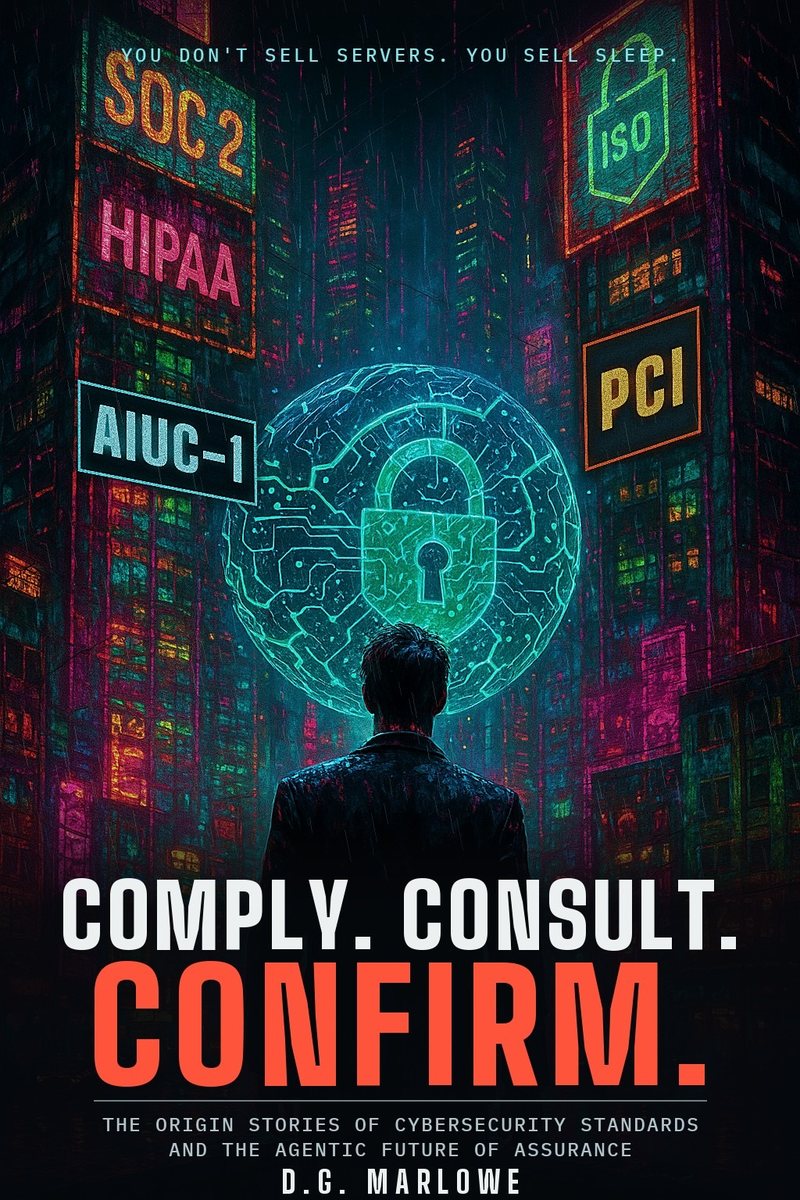
The origin stories of cybersecurity standards and the agentic future of assurance
You sold the thing that happens after the invoice. A controller who stops checking her phone at dinner. A founder who signs the hospital contract without his hand shaking. A night nurse who opens a chart and finds it there. A board that asks one question about security and gets one answer.
From the note before the first page
Every rule in this book passes through three pairs of hands. The book is written for all three: security practitioners, compliance leaders, vCISOs and the service providers who hold everybody's keys.
Learn the rule. Find the boundary. Build the behavior it asks for, so that it happens on an ordinary Tuesday with nobody watching.
Rules do not know your business. Somebody has to decide what the requirement means here, what it costs, and who owns what is left over.
Somebody independent looks. They test what you said against what you did and write down the difference.
Skip the first and you have opinions. Skip the second and you have a checklist. Skip the third and you have a brochure.
One clean domino. The record says something slower and stranger. Light a sign to see what the conference slides leave out, and which chapter tells the story.
Each chapter is a story told through people who never existed, set beside a documented record so you always know which is which. Each one ends on gray paper with a field guide you can use on Monday. Open any chapter to see its premise and the real events behind it.
The real dates under the invented scenes, from a steamboat boiler on the Mississippi to the first audit standard for AI agents. Scroll sideways along the wire.
Each entry names the chapter where it appears. Every date is sourced in the book's notes.
Composites, built from the kinds of rooms where these rules were argued over, signed and broken. They turn up across thirty-eight years. Real people appear only in the record, doing what the public evidence shows, and never speak an invented line.
Also: a CFO who signs a memo, an ISO auditor who asks for verbs, a federal security officer with an eleven-hundred-page plan, a machinist with a coffee can, and an underwriter who started her career pricing oil rigs.
The prologue in full, and the first pages of Chapter 4, where an assessor finds forty characters that are not supposed to exist.
Every chapter ends on gray paper: what to build, what to decide and what to prove. The last three chapters are all gray. One of the worked examples is below: a hundred-and-forty-page SOC 2 report, and ten minutes before the meeting.
The fifteen stories with the stories taken out, in the order you would do it.
One service provider, a year, and five clients under HIPAA, SP 800-171, PCI DSS, SOC 2 and the Cybersecurity Framework.
Ten minutes per document. What to check first, and the sentence each one cannot say.
The book is finished and heading to publishers. Leave your email and you'll hear when it's out, before anyone else. Ask for the free PDF and, if the publishing terms allow, it comes to you the day the final version is ready.